Evidence Aid newsletter: 11 April 2023
Welcome to our April newsletter. In this month’s edition, we will cover some recent updates that may have passed you by — such as the exciting conclusion of our work with the World Health Organization (WHO)’s Knowledge Hub. Also, in combination with our web newsletter, we regularly send out an email version. If you’d like to be notified about a release, please email info@evidenceaid.org.
At the end of March, we delivered our most recent bulletin where we highlighted several summaries:
- The use of internet-based cognitive and behavioral therapy as treatment for PTSD
- The effectiveness of newborn care interventions in humanitarian settings
- The importance of mental health awareness in our Managing Mental Injuries in Disasters collection
As always, we encourage you to share any thoughts, suggestions, or ideas for the improvement of, collaboration with, and delivery of our evidence-based research. As we continue to strive to enhance our work, we want to ensure we take into consideration your feedback and recommendations.
Recent Updates:

7 April 2023: Our work with the World Health Organization (WHO) on the WHO Knowledge Hub for the WHO Guidance on Research Methods for Health Emergency and Disaster Risk Management (EDRM) ended on Friday, April 7th. The WHO Knowledge Hub includes a range of materials which aim to reduce the impact of emergencies and disasters through the dissemination of high-quality research methods. One publication contains a 2022 revised version of WHO guidance which includes the context of emergency and disaster risk management in the context of the Covid-19 pandemic.
27 March 2023: Decision-makers’ experience with rapid evidence summaries to support real-time evidence informed decision-making in crises.
Evidence Aid was recently referenced in an article published by BioMed Central (BMC) Health Services Research as a case study for the effectiveness and utilization of evidence summaries in situations of rapid decision-making and crises. In their critical analysis, Khalid et. al. found that evidence summaries such as ours can be useful in the humanitarian aid sector, particularly when they are presented in a concise, accessible, and non-technical manner. Evidence Aid, in specific, was a source that most participants listed their familiarity with.
28 February 2023: Building Adaptation and Resilience to Heat Waves
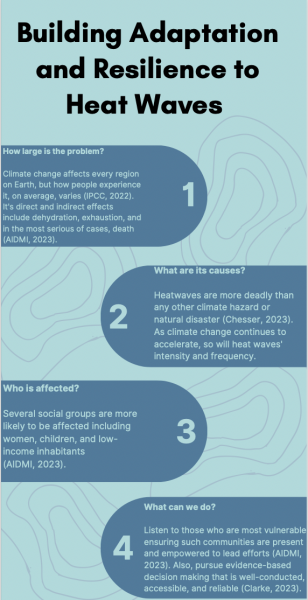
In collaboration with All India Disaster Mitigation Institute (AIDMI), Evidence Aid’s Emeritus Research Director, Mike Clarke, delivered a keynote address in a roundtable on ‘Building Adaptation and Resilience to Heat Waves’. AIDMI presented the need for a mainstream, inclusive, and collaborative implementation of adaptation strategies against extreme heat, particularly in South Asian cities. With a notable focus on more vulnerable social groups, including women, children, and low-income inhabitants, AIDMI recognized the leadership position of vulnerable communities in championing best-practices for adaptation strategies.
In the same recently published issue of ‘Building Adaptation and Resilience to Heat Waves,’ Mike Clarke and Virginia Murray co-authored an article titled, ‘The need for research-based evidence to support humanitarian action on heat waves: Reflections from 2020-2022’. They highlighted the need for a multi-hazard risk management approach to heat wave mitigation, not only amongst other hazards such as wildfires, droughts, cyclones, etc., but also in relation to health and social consequences such as cardiac arrest, gender violence, and mental health. They recognized the need for strengthened research efforts and increased collaboration amongst sectors.
Current Events:
In the wake of the February earthquakes in Türkiye and Syria, we would like to continue to point your attention to our Earthquakes collection. Although first published in June 2021, the summaries include relevant information on the incidence of infectious diseases after earthquakes, and an analysis of social media for psychological surveillance during disasters, to name just several examples. As organizations continue their relief efforts in Türkiye and Syria, there is an increased risk of disease outbreaks, such as the widespread cholera outbreak in northern Syria. With such considerations at the forefront of our minds, we want to reiterate the importance of research evidence in driving the policies and emergency responses so that together, we can save both lives and resources.
Additional Information:
Social media: Three of our volunteers (Leen Khankan, Molly Murton, and Carmela Preciado) promote our summaries and the work of Evidence Aid through several social media accounts. Please follow us to continue to stay up to date on our work and share any content you think is useful.
 Twitter @Evidence Aid
 Facebook Page & Facebook Group
 Linked In @Evidence Aid
 Instagram @evidenceaid
Commissioned projects: Read more about our ongoing projects here.
Careers: Information about Evidence Aid staff, interns, advisors, and trustees can be seen here.
Volunteers: Vital to the ongoing work of Evidence Aid, volunteers are the backbone of our organization. From searching, screening, and downloading reviews to preparing and writing summaries, the work of volunteers is apparent in every ounce of material we produce. If you’re interested in joining our team please email info@evidenceaid.org.
Finally, please share our newsletter with anyone who might find its contents useful and interesting. If you don’t already receive our newsletters directly and would like to, please email info@evidenceaid.org. If you enjoy our work and agree that it’s important we continue through 2023, please consider donating here. Thank you for your support and continued reading!